Serenity (and Self-indulgence) in a Sip: Black Sesame Latte

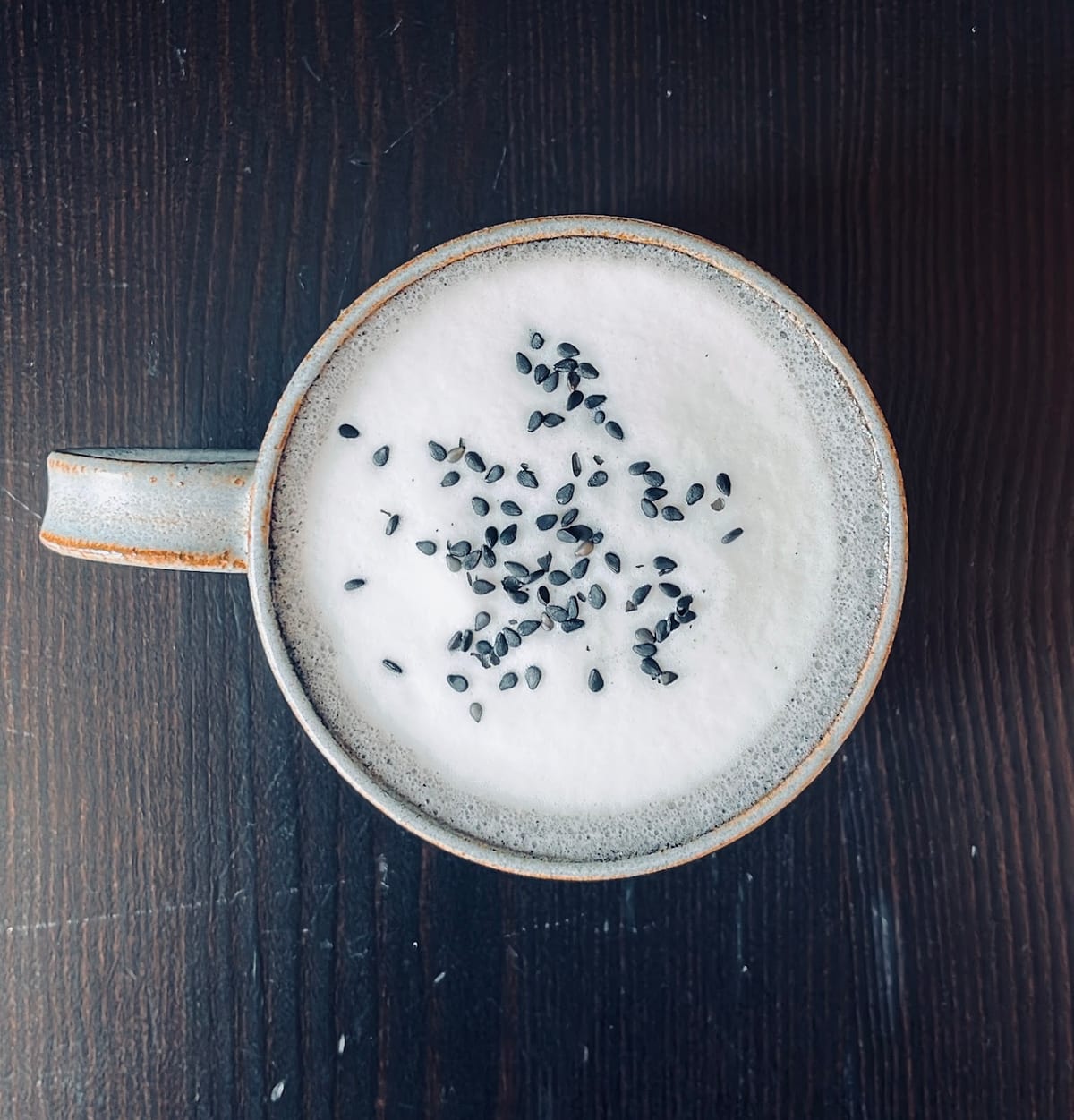
So, feel free to judge me here, but I’ve been obsessed with lattes recently: matcha, chai, turmeric, sesame (obviously), to name a few. Yes, how very first world of me.
It started years ago, back when my palate was more basic, and it offered a welcome reprieve from always ordering tea at cafés. I don’t drink coffee—I can’t stand the taste and have never understood the hype—and while I love tea, it can get a little dull after a while. This latte fixation ramped up after a recent trip to Japan, a sort-of belated honeymoon. I’d always wanted to go, and it didn’t disappoint: it was bloody fantastic. While there, I became hooked on matcha (turns out the anaemic one I once tried at Starbucks—just horrible—was nothing like the real thing. Well duh, Carmel…) and I tried, for the first time, a black sesame latte.
I was somewhere in Nagano, staying in a little spa town not far from the Arashiyama Monkey Park, where snow monkeys famously bathe in hot springs. It was April, and for some reason the weather had decided to plummet just for our visit. On the plus side: yay, guaranteed views of monkeys in the springs. On the minus side: boo, snow, and no winterwear packed. Before heading to see them, the husband grabbed a coffee and I ordered said sesame latte. It didn’t keep me warm for more than five minutes, but the concept completely blew my mind—what, a savoury thing turned into a sweet, hot, frothy drink?
Ever since, I’ve ordered one whenever I’ve come across it (many of which were disappointments) and have been determined to perfect it at home. It reminds me of that trip, and even more importantly, it’s the perfect cosy something to sip while reading or doing low-stress work—scrolling through emails, editing, adding footnotes, maybe a spot of online shopping… Even if you never make this, I urge you to order it if you see it on a reputable café menu. And if you don’t like it, they’ve just made it wrong.
A few notes on the recipe
I'll be honest: black sesame paste (or black tahini) isn’t cheap. It’s hardly a student-budget staple. I hear you. It took me ages to buy my first jar (around 9–10€ here in Berlin for a large one, about £8 in the UK). For that reason, only buy it if you plan to make this more than once—or, if you’ve never tried a sesame latte before, have a backup plan for using it in cooking. It works in most Middle Eastern and some Asian dishes; you can make a quick dressing with black sesame paste, garlic, lemon juice, and hot water for roasted vegetables. It looks beautiful drizzled over roasted squash, cauliflower, or sweet potato.
Still, I regret not buying it sooner. Considering a bog-standard café latte is at least a fiver in most decent coffee shops, the maths works out in favour of making it at home. True, it’s hard to fully replicate coffee shop vibes, but maybe you’re like me and can’t afford to go every day (especially when there’s no guarantee of snagging a table). If YOLO* is still a thing—and I was late to the party with that one—apply it here.
To make this properly, you’ll need a way to froth milk. A milk frother is ideal (I just bought a second-hand Nespresso one—game changer), but a cheap handheld electric frother works surprisingly well. You’ll also need a whisk—bamboo is best, but any small whisk that fits in a mug will do. A handheld frother may even double up here. Some recipes use blenders, which work, but I find them more faff than they’re worth, with too much washing up after.
Milk-wise, use whatever you like, but ideally something that froths well. I go for cow’s milk or oat milk (the latter adds a natural sweetness).
*For everyone born after us millennials or, like me, are similarly behind the times: YOLO stands for “You Only Live Once.” Deeply profound, I know. But in fairness to the trendsetters of my day, philosophers have been trying to put that sentiment into words since the dawn of time.